
Mexican Comfort Food in Jaipur: What Makes Our Menu Different

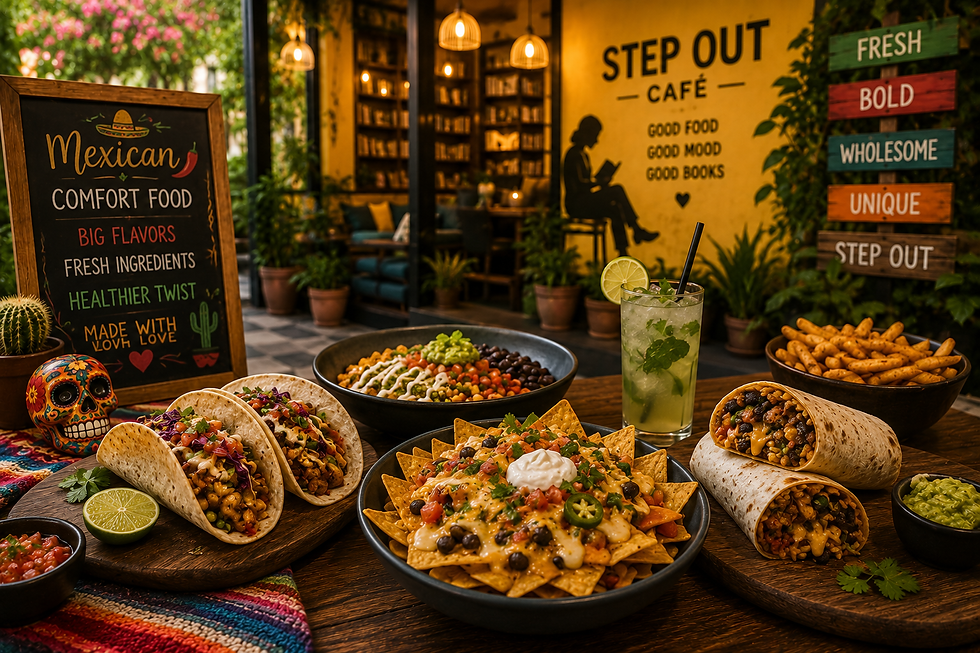
Mexican food in India tends to arrive a little flattened. What shows up on most menus is really Tex-Mex, filtered further through whatever a local kitchen assumes an Indian customer wants extra cheese, extra mayo, not much heat, and very little of the actual technique that makes Mexican food what it is. Jaipur is no exception. Most "Mexican" options around the city are variations on the same tortilla-wrap-and-nachos formula, which isn't wrong exactly, just narrow. There's more to the cuisine than what usually gets served, and that gap is where a different approach to a Mexican menu starts to matter.
What Gets Lost in the Translation
Mexican cooking, at its core, leans heavily on a handful of things: proper masa (corn-based dough) for tortillas, slow-cooked beans rather than canned ones, fresh salsas made day-of rather than bottled, and a real balance of acid, heat, and fat in a dish rather than one flavor dominating. Most Tex-Mex-style menus skip almost all of that in favor of speed flour tortillas instead of corn, pre-made sauces, cheese as the primary flavor carrier.
None of that makes for bad food. It just makes for a narrower version of a much wider cuisine. And for anyone who's had actual Mexican food elsewhere or just wants something closer to it that narrowness is noticeable.
Where the Menu Tries to Do Something Different
A few specific choices separate a more considered take on Mexican food from the standard version found around Jaipur.
Corn-based bases where possible. Corn tortillas and masa-based dishes have a different texture and flavor than flour tortillas slightly nuttier, a bit more textured, and closer to what the cuisine is actually built around. It's a small technical choice that changes how a dish tastes without changing what it looks like on the menu.
Beans cooked from scratch, not from a can. This is one of those differences that's easy to miss unless you're looking for it, but slow-cooked beans have a completely different texture and depth than the canned version most kitchens default to for speed. It takes longer. It's also just better.
Fresh salsas and pico de gallo, made same-day. A jarred salsa and a fresh one aren't really the same product wearing different labels the fresh version has brightness and acidity that bottled sauces lose almost immediately. This is a small, high-effort detail that shows up more in flavor than in presentation.
Dietary flexibility built in, not bolted on. Vegan, gluten-free, and keto-friendly versions of Mexican dishes are possible without much compromise beans, grilled vegetables, and corn-based bases are naturally accommodating to most of these restrictions already. The menu leans into that rather than treating it as a special request.
Why Mexican Food Actually Fits the "Comfort Food" Label
There's a reason Mexican food gets grouped with comfort food more broadly, even outside Mexico. It's built around layering starch, protein, something acidic, something creamy, something with heat stacked in a way that hits several textures and flavors in one bite. That layering is part of what makes it satisfying in a way that's hard to replicate with a single-note dish.
The comfort-food framing also explains why the cuisine translates reasonably well to a health-conscious menu. Swap white rice for a grain like quinoa or millet, keep the beans and fresh vegetables, go easier on cheese and heavier on salsa and lime, and the dish still delivers the same layered, satisfying quality it's just built on different underlying ingredients.
The Trade-Off Nobody Talks About
Doing any of this properly takes more time than the shortcut version. Slow-cooked beans, same-day salsa, and corn-based dough all require more prep than opening a can or using a pre-made mix. That's probably the real reason most kitchens default to the faster version not because it tastes better, but because it's easier to execute consistently at volume. A menu that avoids those shortcuts is making a deliberate trade: more kitchen effort, in exchange for a dish that's closer to the actual cuisine it's named after.
FAQ
Is Mexican food in Jaipur usually authentic, or mostly Tex-Mex style?
Most Mexican-labeled menus around Jaipur lean Tex-Mex flour tortillas, heavier cheese, milder spice rather than following traditional Mexican techniques like corn-based masa or slow-cooked beans.
Are corn tortillas harder to source or make than flour tortillas in India? Corn tortillas require masa harina (a specific corn flour) and a slightly different preparation process, which is part of why flour tortillas are more common they're faster and use more widely available ingredients.
Can Mexican dishes here be made vegan or gluten-free without losing much flavor? Yes, largely because beans, grilled vegetables, and corn-based dishes are naturally vegan and gluten-free to begin with the adjustment usually involves cheese and dairy-based toppings rather than the core dish.
Is fresh salsa noticeably different from bottled salsa in a finished dish? Yes fresh salsa has more acidity and brightness, since bottled versions lose some of that flavor during processing and storage, even when the ingredient list looks similar.
Does slow-cooking beans instead of using canned beans actually make a noticeable difference? Texture is the main difference slow-cooked beans hold their shape better and have a creamier interior, whereas canned beans can be softer and more uniform, with less depth of flavor from the cooking process itself.


Comments